 by
by Market Size Overview
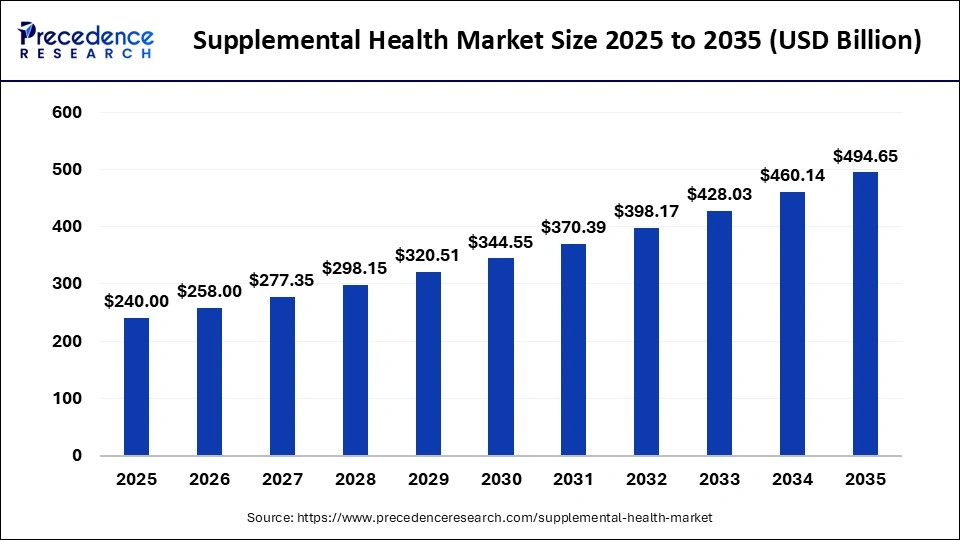
The global supplemental health market is experiencing strong and sustained growth, driven by rising healthcare costs and evolving insurance needs.
- 2025 Market Size: USD 240.00 Billion
- 2026 Market Size: USD 258.00 Billion
- 2035 Forecast: USD 494.65 Billion
- CAGR (2026–2035): 7.50%
This growth reflects the increasing reliance on supplemental insurance policies to fill the financial gaps left by traditional healthcare systems.
Read Also: Aviation Insurance Market
What is the Supplemental Health Market?
The supplemental health market refers to insurance products designed to complement primary health insurance by covering additional medical and non-medical expenses.
These plans typically include:
- Critical illness insurance
- Accident insurance
- Hospital indemnity plans
- Dental and vision coverage
Unlike traditional insurance, supplemental plans often provide cash benefits directly to policyholders, which can be used for:
- Medical bills
- Lost income
- Daily living expenses
- Rehabilitation and recovery costs
This flexibility makes them highly attractive, especially in regions with high out-of-pocket healthcare spending.
Market Dynamics
Key Growth Drivers
1. Rising Out-of-Pocket Healthcare Costs
Globally, individuals are paying a higher share of medical expenses. Supplemental insurance helps reduce this financial burden by covering:
- Deductibles
- Copayments
- Non-covered services
2. Expansion of High-Deductible Health Plans (HDHPs)
HDHPs lower premiums but increase upfront costs. This has significantly boosted demand for supplemental policies that act as financial buffers.
3. Increasing Chronic Disease Burden
The rise in conditions such as:
- Cancer
- Heart disease
- Diabetes
has increased demand for critical illness and hospitalization coverage.
4. Aging Population
Older adults require more frequent and costly medical care, making supplemental insurance essential for long-term financial planning.
5. Growing Health Awareness
Consumers are becoming more proactive about health risks and financial preparedness, driving adoption of additional coverage options.
Impact of Artificial Intelligence (AI)
AI is revolutionizing the supplemental health insurance landscape by improving efficiency, accuracy, and customer experience.
Key Applications:
- Predictive Analytics: Identifies potential health risks and pricing strategies
- Automated Claims Processing: Reduces settlement time drastically
- Fraud Detection: Minimizes losses through intelligent pattern recognition
- Personalized Policies: Customizes plans based on individual health data
AI is also enabling preventive healthcare models, where insurers actively monitor and guide policyholders toward healthier lifestyles.
Emerging Market Trends
1. Digital Transformation & Telehealth Integration
Telemedicine has become a core component of supplemental plans, offering:
- Remote doctor consultations
- Cost-effective care access
- Reduced hospitalization
2. Personalized Insurance Products
Insurers are leveraging:
- Wearable devices
- Health apps
- Real-time monitoring
to create dynamic and customized insurance plans.
3. Preventive Care and Wellness Programs
Modern policies increasingly include:
- Fitness incentives
- Mental health support
- Nutritional guidance
This shift focuses on reducing long-term healthcare costs.
4. Growth of Employer-Sponsored Benefits
Companies are offering supplemental health benefits to:
- Attract talent
- Improve employee satisfaction
- Enhance productivity
5. Rising Popularity of Accident Insurance
Due to increasing urbanization and mobility, accident insurance is gaining traction globally.
Segment Analysis
By Product Type
Dominant Segment: Critical Illness Insurance
- Provides lump-sum payouts upon diagnosis
- Covers major diseases like cancer and heart conditions
- Helps manage both medical and non-medical expenses
Fastest-Growing Segment: Accident Insurance
- Driven by rising accident rates
- Offers quick financial support for emergencies
- Increasing adoption via digital platforms
By End-User (Demography)
Leading Segment: Working Adults (21–64)
- Higher income levels
- Employer-provided benefits
- Greater awareness of financial planning
Fastest-Growing Segment: Seniors (65+)
- Increasing life expectancy
- Higher healthcare utilization
- Need for long-term care coverage
By Coverage Type
Dominant: Individual Plans
- Flexible and customizable
- Ideal for self-employed individuals
- Increasing demand due to declining employer coverage
Fastest-Growing: Group Plans
- Cost-effective through risk pooling
- Tax advantages
- Widely adopted by employers
By Distribution Channel
Leading: Brokers and Agents
- Provide expert guidance
- Help compare complex policies
- Strong presence in traditional insurance markets
Fastest-Growing: Employer/Workplace Programs
- Easy enrollment
- Bulk purchasing benefits
- Increasing employer adoption
Regional Analysis
North America – Market Leader
- High healthcare expenditure
- Widespread adoption of HDHPs
- Advanced insurance infrastructure
The U.S. dominates due to:
- Strong employer-sponsored insurance culture
- Rising demand for customized health benefits
Asia-Pacific – Fastest Growing Region
- Expanding middle class
- Rising disposable income
- Increasing healthcare awareness
Countries like India and China are witnessing:
- Rapid insurance penetration
- Government healthcare initiatives
- Growth in private insurance providers
Europe – Significant Growth
- Aging population
- Rising healthcare costs
- Demand for personalized coverage
Countries such as the UK are shifting toward cost-effective supplemental group plans.
Latin America & MEA – Emerging Markets
- Growing urban population
- Increasing chronic disease prevalence
- Government-driven insurance reforms
These regions present high growth potential due to underpenetrated insurance markets.
Competitive Landscape
Key companies operating in the market include:
- UnitedHealthcare
- MetLife, Inc.
- Humana Inc
- Elevance Health
- Prudential Financial
- Guardian Life Insurance
- Aetna
These players are focusing on:
- Digital transformation
- AI integration
- Product innovation
- Strategic partnerships
Future Outlook
The supplemental health market is poised for strong expansion due to:
- Increasing reliance on private insurance
- Growth of digital health ecosystems
- Rising global healthcare inflation
- Expansion into emerging markets
Future innovations will likely include:
- Real-time health monitoring insurance
- Usage-based insurance models
- Fully digital claims ecosystems
Conclusion
The supplemental health market is becoming an essential pillar of modern healthcare systems. As traditional insurance struggles to cover rising medical costs, supplemental plans provide financial security, flexibility, and enhanced access to care.
With strong growth projections and continuous innovation, this market is expected to nearly double by 2035, making it one of the most dynamic segments in the global insurance industry.
Get Sample Copy: https://www.precedenceresearch.com/sample/7883
For inquiries regarding discounts, bulk purchases, or customization requests, please contact:
sales@precedenceresearch.com

