
 by
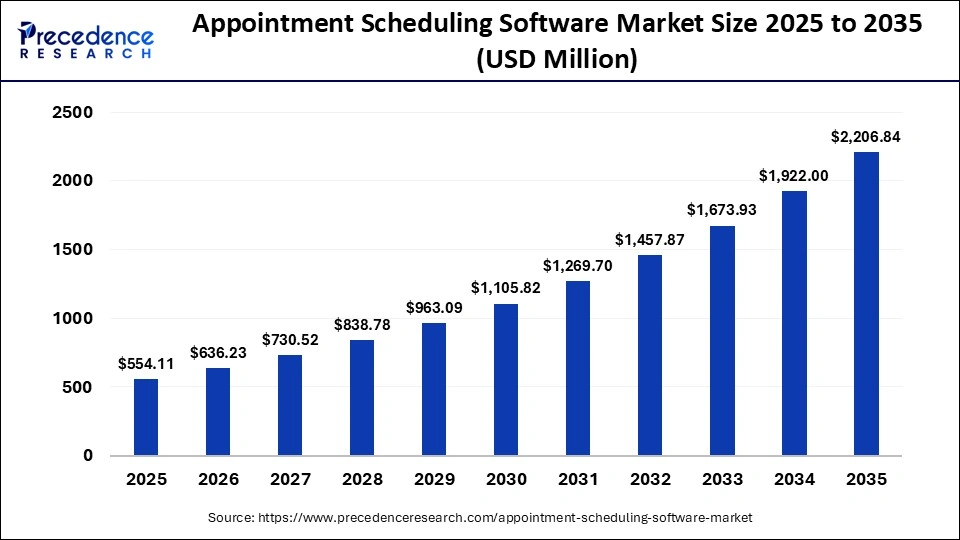
by The global appointment scheduling software market is growing rapidly as businesses seek digital tools to manage bookings, reduce no‑shows, and streamline customer‑facing services. According to Precedence Research, the market was valued at USD 554.11 million in 2025 and is projected to reach around USD 2,206.84 million by 2035, expanding at a CAGR of 14.82% over the forecast period (2026–2035).
This article explains what appointment scheduling software is, key growth drivers, market segments, and regional outlook for this SaaS‑driven industry.
Read Also: Direct Attached AI Storage System Market
What Is Appointment Scheduling Software?
Appointment scheduling software is a digital platform that allows businesses to manage bookings, shifts, and reservations through web and mobile interfaces. Clients can view available time slots, book, reschedule, or cancel appointments, while businesses benefit from automated reminders, calendar sync, and integrated online payments.
Common features include:
-
Online booking widgets and mobile‑friendly booking pages.
-
Automated SMS and email reminders to reduce no‑shows.
-
Staff shift planning, multi‑location support, and integration with CRM, payments, and calendars.
Industries such as healthcare, beauty & wellness, education, professional services, and hospitality increasingly rely on scheduling software to improve customer experience and operational efficiency.
Market Size and Growth (2025–2035)
The market is expanding at a double‑digit pace, driven by the shift to digital workflows and cloud‑based tools.
Key figures:
-
Market size in 2025: Approximately USD 554.11 million.
-
Projected size by 2035: Around USD 2,206.84 million.
-
CAGR from 2026 to 2035: 14.82%.
Other studies on scheduling and appointment‑software platforms also report similar high‑growth trajectories, with CAGRs in the 11–15% range through 2034–2035, confirming strong long‑term demand.
What Is Driving Market Growth?
Several structural and technological trends are fueling the adoption of appointment scheduling software.
1. Shift to Cloud‑Based SaaS Models
Cloud‑hosted, subscription‑based (SaaS) scheduling platforms are attractive because they offer low upfront costs, easy scalability, and automatic updates. This allows small and medium‑sized businesses (SMBs) to adopt powerful booking tools without investing in on‑premise infrastructure.
2. Rising Smartphone and Internet Usage
Increasing smartphone penetration and internet usage are pushing demand for mobile‑first booking experiences. Consumers expect to book appointments anytime, from any device, which favors scheduling platforms with strong mobile apps and responsive web interfaces.
3. Focus on Reducing No‑Shows and Admin Burden
No‑show appointments hurt revenue and increase administrative workload. Scheduling software helps by:
-
Sending automated reminders and confirmations via SMS and email.
-
Enabling online cancellations and rescheduling, reducing manual front‑desk work.
4. Integration of AI and Automation
AI‑driven scheduling tools are becoming more common, offering features such as:
-
Smart time‑slot suggestions and workload‑based recommendations.
-
Chatbot‑based assistants to answer questions and book appointments on chat or voice platforms.
These capabilities improve customer experience, reduce friction, and help staff focus on core services rather than routine booking tasks.
Market Segments at a Glance
The appointment scheduling software market is typically segmented by functionalities, business size, deployment mode, industry vertical, and region.
By Functionality (2025 Snapshot)
-
Appointment scheduling: Led the market in 2025, handling core booking, modification, and cancellation workflows.
-
Staff scheduling / shift planning: Growing segment used by multi‑location businesses and service providers to manage rosters and coverage.
-
Calendar management and online booking: Supports calendar sync, resource allocation, and multi‑location booking.
By Business Size
-
Small and medium‑sized businesses (SMBs) held the largest market share in 2025, driven by affordable SaaS packages and the need to manage appointments and staff across multiple locations.
-
Large enterprises use advanced, integrated scheduling suites that connect with CRM, ERP, and customer‑service platforms.
By Industry Vertical
Key verticals include:
-
Healthcare and medical services
-
Beauty, wellness, and fitness
-
Professional services (consulting, legal, real‑estate, accounting)
-
Hospitality and event services
-
Education and tutoring
In healthcare, tools help manage patient visits, telehealth sessions, and follow‑ups, while in beauty and wellness, platforms support class bookings, course registrations, and recurring appointments.
Regional Outlook
The market is analyzed across North America, Europe, Asia‑Pacific, Latin America, and the Middle East & Africa.
North America Leads the Market
-
North America dominated the global appointment scheduling software market in 2025, accounting for around 34% of revenue share.
-
The region is home to major SaaS vendors, cloud platforms, and digital‑first service providers, all of which adopt scheduling software widely.
Key growth drivers in North America include:
-
Strong SMB adoption of cloud‑based scheduling tools.
-
High demand for telehealth, hybrid services, and anytime‑booking experiences.
Europe and Asia‑Pacific: Steady Growth
-
Europe is growing steadily, supported by increasing use of online booking platforms in healthcare, professional services, and hospitality.
-
Asia‑Pacific is expected to expand at a high CAGR as smartphone penetration increases and local businesses adopt digital tools for beauty, education, and healthcare services.
Major Players and Recent Trends
The appointment scheduling software ecosystem includes pure‑play scheduling platforms, integrated CRM and POS providers, and niche vertical‑specific tools.
Key Companies (Examples)
Industry reports highlight players such as:
-
Calendly (US)
-
Acuity Scheduling (US)
-
Square Appointments (US)
-
SimplyBook.me (Denmark)
-
10to8 (UK)
-
Setmore (US)
-
Booksy (Poland)
-
Appointy (India)
-
TimeTrade (US)
Recent Developments
-
Integration of AI‑driven assistants into scheduling platforms to automate booking, reminders, and follow‑ups.
-
Hybrid appointment models enabling both in‑person and virtual consultations, which push adoption of flexible scheduling tools.
-
Strong focus on user experience (UX), mobile‑first design, and multi‑channel notifications (email, SMS, in‑app) to reduce no‑shows and improve customer satisfaction.
Get Sample: https://www.precedenceresearch.com/sample/8272
For inquiries regarding discounts, bulk purchases, or customization requests, please contact us at sales@precedenceresearch.com

