
 by
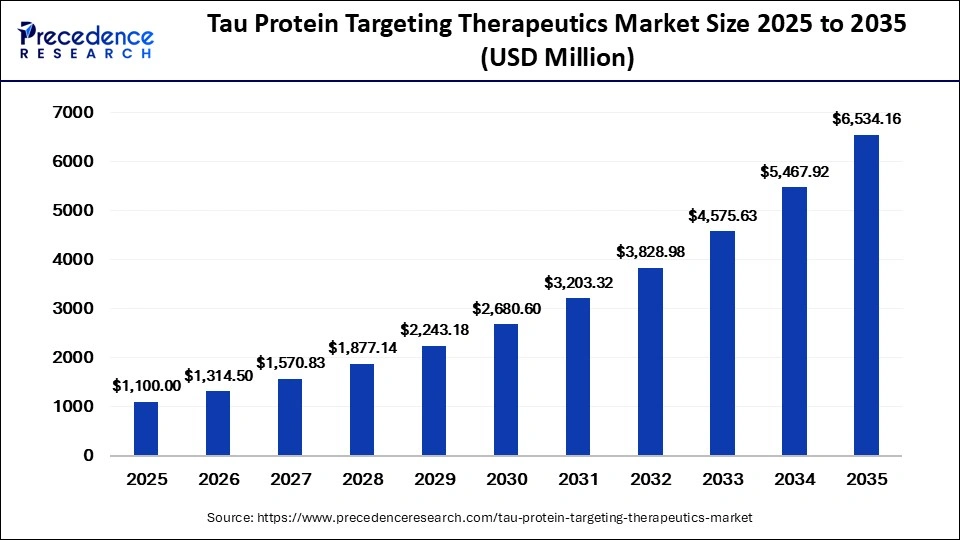
by The global tau protein targeting therapeutics market is projected to reach USD 6.53 billion by 2035, fueled by rising Alzheimer’s disease prevalence, neurodegenerative research advancements, and precision medicine innovations.
Tau Protein Targeting Therapeutics Market Size 2026 to 2035
The global tau protein targeting therapeutics market is experiencing significant growth as pharmaceutical companies, biotechnology firms, and research institutions intensify efforts to develop effective treatments for Alzheimer’s disease and other neurodegenerative disorders. The market size accounted for USD 1.10 billion in 2025 and is projected to increase from USD 1.31 billion in 2026 to approximately USD 6.53 billion by 2035, expanding at a CAGR of 19.50% during the forecast period.
The rising prevalence of Alzheimer’s disease, frontotemporal dementia, Parkinson’s disease, and other tauopathies is driving strong demand for next-generation therapies focused on tau protein aggregation, neuroinflammation, and neuronal degeneration.
Researchers are increasingly shifting attention toward tau-targeted treatment strategies as amyloid-focused approaches continue facing efficacy and clinical limitations.
Read Also: Cleaning Services Market
Understanding Tau Protein and Neurodegenerative Diseases
Tau proteins are naturally occurring proteins responsible for stabilizing microtubules within neurons. However, abnormal tau accumulation and aggregation can disrupt neuronal communication and contribute to progressive neurodegenerative diseases.
Tau pathology is strongly associated with:
- Alzheimer’s disease
- Frontotemporal dementia
- Progressive supranuclear palsy
- Corticobasal degeneration
- Chronic traumatic encephalopathy
- Parkinson’s disease-related dementia
Tau protein aggregation forms neurofibrillary tangles that impair brain function, accelerate cognitive decline, and contribute to neuronal death.
As understanding of tau-related disease mechanisms improves, pharmaceutical companies are aggressively developing therapeutics aimed at slowing or halting disease progression.
AI and Precision Medicine Reshaping Neurology Research
Artificial intelligence and machine learning technologies are increasingly transforming neurodegenerative drug discovery and biomarker identification.
AI-powered systems are helping researchers:
- Analyze protein folding mechanisms
- Identify therapeutic targets
- Accelerate clinical trial design
- Predict disease progression
- Improve patient stratification
- Optimize drug development pipelines
AI-driven imaging analytics and biomarker detection tools are becoming critical components of Alzheimer’s research and precision neurology initiatives.
Advanced computational biology platforms are also enabling researchers to simulate tau aggregation behavior and improve therapeutic candidate selection.
Key Market Highlights
- North America dominated the global tau protein targeting therapeutics market in 2025 due to strong neurological research infrastructure and pharmaceutical innovation.
- Asia-Pacific is expected to witness the fastest growth during the forecast period.
- Monoclonal antibody therapies accounted for a significant market share.
- Alzheimer’s disease emerged as the leading application segment globally.
- Hospitals and specialty neurology centers represented major end-users.
- Biomarker-driven personalized neurology therapies are gaining momentum.
- AI-assisted neurodegenerative drug discovery is accelerating market innovation.
Key Trends Driving the Tau Protein Targeting Therapeutics Market
Rising Alzheimer’s Disease Burden Worldwide
The rapidly growing global burden of Alzheimer’s disease remains one of the strongest market drivers.
According to neurological research organizations, aging populations and increasing life expectancy are significantly expanding the number of patients affected by dementia and cognitive disorders worldwide.
The urgent need for disease-modifying therapies is accelerating investments in tau-targeted drug development programs.
Growing Shift Toward Tau-Focused Drug Development
Pharmaceutical companies are increasingly prioritizing tau-based therapeutic strategies after years of mixed outcomes from amyloid-beta focused approaches.
Tau-targeted therapies aim to:
- Prevent tau aggregation
- Reduce neurofibrillary tangles
- Stabilize neuronal function
- Slow disease progression
- Improve cognitive outcomes
This strategic shift is creating significant research and commercial opportunities within neurodegenerative medicine.
Expansion of Monoclonal Antibody Therapies
Monoclonal antibodies targeting pathological tau proteins are emerging as one of the most promising therapeutic approaches.
These therapies are designed to neutralize toxic tau proteins and prevent their spread between neurons.
Several biotechnology companies are actively advancing tau monoclonal antibody candidates through clinical development pipelines.
Increasing Biomarker and Diagnostic Advancements
The development of advanced biomarkers and neuroimaging technologies is significantly improving early diagnosis and patient monitoring capabilities.
Researchers are increasingly utilizing:
- PET imaging
- Cerebrospinal fluid biomarkers
- Blood-based biomarkers
- AI-driven neuroimaging analytics
These technologies help identify disease progression earlier and support more precise therapeutic interventions.
Market Dynamics
Driver: Growing Investments in Neurodegenerative Research
Governments, pharmaceutical companies, and research institutions are significantly increasing investments in neurodegenerative disease research and therapeutic development.
The growing economic and social burden of dementia is encouraging accelerated funding for Alzheimer’s disease therapies, biomarker discovery, and precision medicine initiatives.
Major pharmaceutical companies are expanding collaborations with biotechnology firms and academic institutions to accelerate tau-focused innovation.
Restraint: Clinical Trial Complexity and High Failure Rates
Despite strong research momentum, neurodegenerative drug development remains highly complex and risky.
Tau protein targeting therapies often face challenges related to:
- Long clinical trial durations
- Complex disease biology
- Patient heterogeneity
- Biomarker validation
- Regulatory uncertainty
- High development costs
Many experimental therapies fail during late-stage clinical trials, creating substantial financial and operational risks for developers.
Industry discussions across scientific communities continue highlighting concerns regarding translational challenges between laboratory findings and clinical efficacy.
Opportunity: Personalized Neurology and Combination Therapies
The emergence of precision medicine and combination treatment approaches presents major future opportunities for the tau therapeutics market.
Future therapeutic strategies may increasingly combine:
- Tau-targeting agents
- Anti-inflammatory therapies
- Gene therapies
- Neuroprotective drugs
- AI-driven personalized treatment protocols
Personalized neurology approaches could significantly improve treatment effectiveness and patient outcomes.
Segmental Insights
Monoclonal Antibodies Dominated Therapeutic Development
Monoclonal antibody therapies represented a leading segment within the tau protein targeting therapeutics market due to strong clinical research activity and growing pharmaceutical investment.
These therapies are designed to target pathological tau proteins while minimizing damage to healthy neuronal structures.
Their precision-targeting capabilities make them highly attractive for disease-modifying neurological treatments.
Alzheimer’s Disease Emerged as the Largest Application Segment
Alzheimer’s disease accounted for the largest market share due to its growing global prevalence and urgent unmet medical needs.
The increasing incidence of dementia among aging populations is significantly accelerating demand for innovative neurodegenerative therapies.
Healthcare systems worldwide are prioritizing early diagnosis and disease-modifying treatment development to reduce long-term care burdens.
Hospitals and Neurology Centers Led End-Use Adoption
Hospitals and specialized neurology centers represented major end-users due to their role in advanced diagnostics, clinical trials, and neurological treatment administration.
These facilities increasingly utilize precision imaging technologies, biomarker testing, and multidisciplinary neurological care models.
Regional Insights
North America Maintains Market Leadership
North America dominated the global tau protein targeting therapeutics market due to advanced neurological research infrastructure, strong pharmaceutical innovation ecosystems, and growing Alzheimer’s disease prevalence.
The United States remains a major center for neurodegenerative clinical research and biotechnology investment.
Strong NIH funding support and pharmaceutical R&D activities continue accelerating regional innovation.
Asia-Pacific Emerging as the Fastest-Growing Region
Asia-Pacific is expected to witness the fastest market growth due to rapidly aging populations, expanding healthcare infrastructure, and rising neurological disease awareness.
Countries such as Japan, China, South Korea, and India are increasing investments in neuroscience research and precision medicine initiatives.
Japan, in particular, is becoming a major hub for neurodegenerative disease research due to its aging demographic profile.
Europe Expanding Neurology Research Collaboration
Europe continues to witness strong growth in neurodegenerative research and biomarker innovation.
Collaborative research programs, academic partnerships, and government-supported neuroscience initiatives are accelerating development of tau-targeted therapeutic strategies across the region.
Competitive Landscape
Major companies operating in the tau protein targeting therapeutics market include:
- Biogen
- Eli Lilly and Company
- Roche
- AbbVie
- Johnson & Johnson
- TauRx Pharmaceuticals
- AC Immune
- Novartis
These companies are actively investing in monoclonal antibodies, tau aggregation inhibitors, biomarker platforms, AI-driven drug discovery, and personalized neurology research programs.
Recent Industry Developments
- Several biotechnology companies are advancing next-generation tau monoclonal antibody therapies through clinical development.
- AI-powered biomarker research platforms are increasingly being integrated into neurodegenerative drug discovery workflows.
- Pharmaceutical companies continue expanding partnerships with academic neuroscience institutions to accelerate Alzheimer’s therapy innovation.
Future Outlook
The tau protein targeting therapeutics market is expected to witness substantial long-term growth as the global burden of neurodegenerative diseases continues rising.
The convergence of AI-driven drug discovery, biomarker innovation, monoclonal antibody development, and personalized neurology will continue transforming the future of Alzheimer’s disease treatment.
As pharmaceutical companies and healthcare systems increasingly focus on disease-modifying therapies and early intervention strategies, tau-targeted therapeutics are expected to become a central pillar of next-generation neurological care.
Get a Sample Copy: https://www.precedenceresearch.com/sample/8423
For inquiries regarding discounts, bulk purchases, or customization requests, please contact us at sales@precedenceresearch.com

