 by
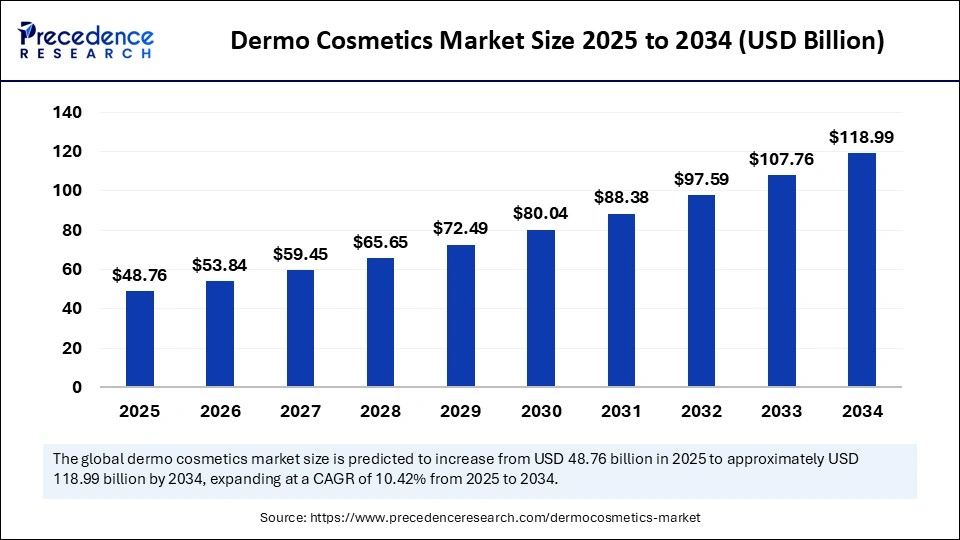
by The global dermo cosmetics market size is valued at USD 48.76 billion in 2025, is anticipated to expand robustly to approximately USD 118.99 billion by 2034, growing at a CAGR of 10.42% from 2025 to 2034.
This surge is driven by increasing consumer awareness about skin health, the rising incidence of chronic skin conditions like acne and eczema, and the fusion of dermatology with cosmetic science, enhancing product efficacy and trust.
Dermo Cosmetics Market Key Points
-
The market size is expected to grow from USD 48.76 billion in 2025 to USD 118.99 billion by 2034.
-
North America held the largest market share in 2024, supported by a mature healthcare ecosystem.
-
Asia Pacific is projected to witness the fastest CAGR during the forecast period, driven by rising incomes and beauty consciousness.
-
Skincare dominates the product segment, with haircare poised for remarkable growth.
-
The female end-user segment controls the largest market share, while the male segment is growing rapidly.
-
Pharmacy stores remain the leading distribution channel, with supermarkets and hypermarkets showing significant expansion.
Understanding the Dermo Cosmetics Market
What exactly constitutes the dermo cosmetics market? This sector blends dermatological science with cosmetic innovation to offer products that do not simply beautify but also therapeutically enhance skin health. Clinical validation and dermatological endorsements are central, transforming consumer expectations from superficial cosmetic use to evidence-based skincare solutions. The industry now integrates biotechnology, pharmacology, and personalized care to redefine skincare standards globally.
How is Artificial Intelligence Shaping the Dermo Cosmetics Industry?
AI is revolutionizing dermo cosmetics by enabling personalized diagnostics and facilitating targeted topical therapeutics. Technologies such as AI-driven complexion analysis, non-invasive imaging, and microbiome assays allow for patient segmentation based on skin barrier function and inflammatory profiles. This data-driven approach supports modular formulation platforms, where active ingredients are blended to match individual needs, improving efficacy and skin tolerance.
Additionally, digital platforms harness AI to track treatment outcomes longitudinally, converting anecdotal consumer feedback into evidence-based adjustments. This enhances repeatability and trust in dermo cosmetic products, enabling brands to deliver personalized, clinically relevant skincare experiences.
Dermo Cosmetics Market Scope
| Report Coverage | Details |
| Market Size in 2025 | USD 48.76 Billion |
| Market Size in 2026 | USD 53.84 Billion |
| Market Size by 2034 | USD 118.99 Billion |
| Market Growth Rate from 2025 to 2034 | CAGR of 10.42% |
| Dominating Region | North America |
| Fastest Growing Region | Asia Pacific |
| Base Year | 2024 |
| Forecast Period | 2025 to 2034 |
| Segments Covered | Type, End User, Coating, Installation Type, and Region |
| Regions Covered | North America, Europe, Asia-Pacific, Latin America, and Middle East & Africa |
What Are the Primary Growth Drivers in the Market?
Clinical credibility is paramount to consumer confidence, with peer-reviewed results transforming skepticism into loyalty. The rise in skin disorders, enhanced consumer education about therapeutic skincare, and growing preference for scientifically validated products bolster demand. Regulatory clarity and dermatological endorsements further facilitate premium pricing and pharmacy channel expansion. Sustainability trends and personalized product innovations also stimulate market penetration and consumer engagement.
What Opportunities and Trends Are Emerging?
How is personalization shaping the future of dermo cosmetics? The market is shifting from mass-market formulations to precision care regimes that incorporate diagnostics, teledermatology, and subscription-based models. This creates recurring revenue streams and generates real-world evidence supporting product claims.
What role do emerging markets play? Increased affluence combined with developing dermatological infrastructure offers fertile ground for clinically oriented yet affordable dermocosmetic products, displacing substandard OTC alternatives.
Which technological advancements are setting the pace? The integration of microbiome-aware formulations, clean science validation, hybrid commercial channels, and sustainable packaging are key industry trends.
Dermo Cosmetics Market Segmental Analysis
By Product: Skin Care Leads the Market
The skin care products segment dominated the dermo cosmetics market in 2024, driven by their broad application in addressing conditions such as acne, pigmentation, aging, and sun damage. The growing consumer focus on maintaining healthy, radiant skin and the rising availability of dermatologically tested formulations have strengthened this segment’s leadership.
By End User: Female Consumers Drive Demand
Female consumers accounted for the largest share of the dermo cosmetics market, reflecting heightened interest in anti-aging, hydration, and skin-brightening solutions. This growth is fueled by socially influenced beauty standards, rising skincare awareness, and product customization based on diverse skin types and concerns.
By Distribution Channel: Pharmacy Stores Dominate
Pharmacy stores remained the leading sales channel in 2024, as consumers continue to trust dermatologist-recommended and clinically tested products. The availability of dermo-cosmetic products through local pharmacies enhances credibility and encourages repeat purchases, making this channel a key pillar of market distribution.
Dermo Cosmetics Market Regional Analysis
North America: Market Leader
North America held the largest share of the global dermo cosmetics market in 2024, supported by high consumer awareness, strong disposable incomes, and a well-established distribution network that includes pharmacies, dermatologists, and premium retailers.
The United States leads the region, with consumers increasingly embracing clinically backed skincare lines and products endorsed by dermatologists. Demand for anti-aging, sensitive-skin, and evidence-based formulations continues to strengthen the region’s market position.
Asia-Pacific: Fastest-Growing Region
The Asia-Pacific region emerged as the fastest-growing market for dermo cosmetics, driven by a rising middle-class population, higher disposable income, and growing awareness of skin health and beauty care.
Key markets such as China, South Korea, Japan, and India are witnessing surging demand for anti-aging, brightening, sun protection, and pollution-defense products. Cultural influences like K-beauty and J-beauty trends, coupled with digital marketing and influencer engagement, are propelling rapid category expansion across the region’s urban centers.
What are the latest market breakthroughs from leading companies?
Several top companies are innovating relentlessly in dermo cosmetics. L’Oréal Groupe leads with brands like La Roche-Posay and Vichy focusing on microbiome health and sensitivity management. Johnson & Johnson, through Neutrogena and Aveeno, prioritizes clinically validated hydration and sun protection solutions. Beiersdorf’s Eucerin leverages patented technologies for barrier repair, while Unilever advances sustainable dermatology with Dove DermaSeries. Shiseido integrates functional skincare innovations emphasizing moisture barrier restoration.
Recent notable developments include dermatologist-recommended sensitive skin lines launched at Sephora, as well as Paris Sisley’s new Dermatological Responses sub-range targeting sensitive skin care in 2025.
Dermo Cosmetics Market Companies
-
L’Oréal Groupe
-
Johnson & Johnson
-
Beiersdorf Aktiengesellschaft
-
Unilever PLC
-
Shiseido Co., Limited
-
Amorepacific
-
Kanebo Cosmetics Inc.
-
Avon Products, Inc.
-
Lotus Herbals Pvt. Ltd.
-
VLCC Health Care Limited
-
Himalaya Global Holdings Ltd.
What challenges and cost pressures does the industry face?
Regulatory ambiguity between cosmetics and therapeutics imposes challenges, requiring costly clinical trials and complex compliance that particularly strain small and medium formulators. Limited reimbursement options keep some advanced treatments premium-priced, restricting mass adoption. Varying international labeling and regulatory standards elevate product launch costs and timelines.
Case Study: Harnessing Diagnostic-Driven Personalization
Leading brand La Roche-Posay implemented AI-based skin diagnostics to create customized skincare regimens in partnership with dermatologists. This approach improved patient adherence and measurable skin barrier recovery, reinforcing premium positioning in North America and Asia Pacific markets.
Read Also: Circulating Tumor DNA (ctDNA) Market
You can place an order or ask any questions. Please feel free to contact us at sales@precedenceresearch.com |+1 804 441 9344

- Managed DNS Services Market Size to Hit USD 2,288.60 Million by 2035 - March 5, 2026
- Power EPC Market Size to Hit USD 1,376.29 Billion by 2035 - March 5, 2026
- Ursolic Acid Market Size to Hit USD 68.77 Billion by 2035 - March 5, 2026
