
 by
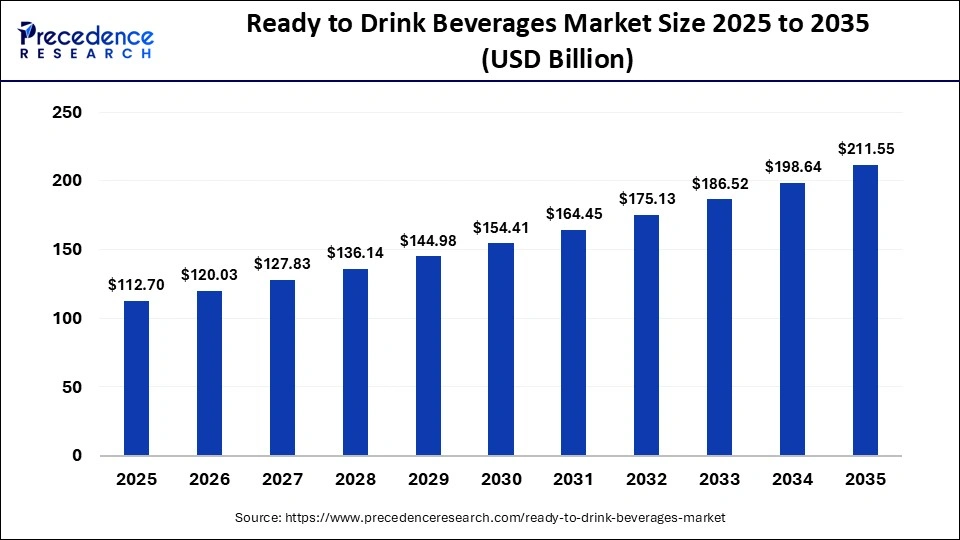
by The global ready to drink beverages market is entering a transformative growth phase, fueled by evolving consumer lifestyles and a rising preference for convenient, functional, and health-oriented beverage solutions. Valued at USD 112.70 billion in 2025, the market is projected to grow from USD 120.03 billion in 2026 to approximately USD 211.55 billion by 2035, expanding at a CAGR of 6.50% during the forecast period.
The surge is primarily driven by increasing urbanization, rising disposable incomes, and a global shift toward healthier, ready-to-consume hydration and nutrition options. Consumers are actively seeking beverages enriched with vitamins, minerals, proteins, and plant-based ingredients, reshaping the competitive landscape for beverage manufacturers worldwide.
Read Also: Robotic Simulator Market
Quick Insights: What Defines the Market Landscape?
- The global market is valued at USD 120.03 billion in 2026 and is expected to reach USD 211.55 billion by 2035, reflecting strong growth momentum.
- North America led the market in 2025 with a dominant 38% share due to high consumption of functional and premium beverages.
- Europe emerged as the second-largest region and is anticipated to witness the fastest growth during the forecast period.
- Non-alcoholic beverages dominated the market with a 75% share in 2025, driven by health-conscious consumption trends.
- Retail stores accounted for the highest distribution share of 65%, supported by strong offline retail infrastructure.
- Cans led packaging formats with a 45% share, owing to portability and sustainability benefits.
- Adults remained the largest consumer group, contributing 55% of total demand in 2025.
How is Artificial Intelligence Transforming the RTD Beverage Market?
Artificial intelligence is becoming a strategic enabler in the ready-to-drink beverages industry, particularly in product innovation and consumer targeting. Companies are leveraging AI-powered analytics to decode consumer behavior, enabling them to design personalized beverages with optimized nutritional profiles such as low sugar, high protein, and plant-based formulations. This data-driven approach is significantly accelerating product development cycles.
Additionally, AI is revolutionizing marketing strategies through personalized campaigns and dynamic pricing models. Brands can now identify digital consumer patterns and deliver tailored recommendations, improving customer engagement and loyalty. This technological integration is not only enhancing operational efficiency but also creating highly customized consumer experiences.
What Are the Key Growth Drivers of the RTD Beverages Market?
The increasing demand for functional nutrition is a major driver shaping the market. Modern consumers are actively seeking beverages that offer health benefits beyond hydration, such as immunity boosting, energy enhancement, and digestive support. This trend is particularly prominent among urban populations with fast-paced lifestyles.
Urbanization is another critical growth factor. With over 58% of the global population living in urban areas, the demand for portable and ready-to-consume beverages has surged. Additionally, the growing fitness culture and awareness around healthy living are pushing consumers toward nutrient-rich RTD beverages, further strengthening market expansion.
What Trends Are Shaping the Future of RTD Beverages?
Is Protein-Enriched Beverage Consumption Becoming Mainstream?
Yes, protein-infused RTD beverages are rapidly gaining traction beyond sports nutrition. Consumers are increasingly integrating high-protein drinks (20–40 grams per serving) into daily diets as meal replacements or supplements. This trend is significantly expanding the functional beverage segment.
Are Natural Energy Drinks Replacing Traditional Stimulants?
Absolutely. Consumers are shifting toward natural energy sources such as matcha, yerba mate, and botanical extracts. These alternatives offer sustained energy without side effects, aligning with the growing preference for clean-label products.
How Is Urban Lifestyle Influencing Beverage Consumption?
Urbanization continues to drive demand for on-the-go beverage solutions. Busy schedules and changing consumption habits are increasing reliance on convenient, single-serve RTD formats.
Why Are Plant-Based Beverages Gaining Popularity?
The rise in veganism and lactose intolerance is accelerating the adoption of plant-based beverages. Consumers are actively choosing dairy-free and environmentally sustainable drink options.
Segment Analysis: Where is the Market Heading?
Product Type Analysis: Why Do Non-Alcoholic Beverages Dominate?
Non-alcoholic beverages held a commanding 75% share in 2025 due to widespread demand for hydration and wellness products. Consumers prefer beverages that fit into daily routines, such as bottled water, juices, and functional drinks.
Meanwhile, alcoholic RTD beverages are gaining momentum, driven by the popularity of ready-to-drink cocktails and premium flavored options among younger consumers.
Distribution Channel Analysis: Why Do Retail Stores Lead?
Retail stores dominated the market with a 65% share, supported by strong global networks of supermarkets and convenience stores. Consumers continue to prefer physical shopping due to immediate availability and promotional offers.
However, online retail is growing rapidly, fueled by e-commerce expansion, subscription models, and increasing digital adoption.
Packaging Insights: Why Are Cans the Preferred Format?
Cans accounted for 45% of the market in 2025 due to their lightweight, portability, and recyclability. They are especially popular for carbonated and energy drinks.
Bottles are also witnessing strong growth, offering resealability and convenience for multi-serve consumption, particularly in juices and cold beverages.
End User Analysis: Why Do Adults Dominate Consumption?
Adults represented 55% of the market, driven by increasing demand for functional beverages that support energy, fitness, and overall wellness.
The teens and youth segment is expanding rapidly due to social media influence and evolving taste preferences, while demand for children’s beverages is growing with rising parental awareness around nutrition.
Regional Insights: Where is Growth Concentrated?
Why Does North America Lead the Market?
North America dominated with a 38% share in 2025, driven by high consumption of premium and functional beverages. Consumers in the region prioritize health, convenience, and innovation, making it a mature yet dynamic market.
Why is Europe the Fastest-Growing Region?
Europe is expected to grow at the fastest rate due to strict regulations promoting healthier products and sustainable packaging. Demand for organic and plant-based beverages is particularly strong.
How is Asia Pacific Emerging as a Growth Hub?
Asia Pacific is witnessing rapid expansion due to rising disposable incomes, urbanization, and changing dietary habits. Countries like India are experiencing increased adoption of packaged beverages, supported by expanding retail and digital infrastructure.
Competitive Landscape and Key Companies
The market is highly competitive, with global players focusing on innovation, product diversification, and strategic expansions. Key companies include:
- Arizona Beverage Company
- Asahi Group Holdings, Ltd.
- Coca-Cola Company
- Danone S.A.
- Keurig Dr Pepper Inc.
- Monster Beverage Corporation
- Nestle S.A.
- PepsiCo, Inc.
- Red Bull GmbH
- Unilever PLC
Recent Developments Driving Innovation
- In April 2026, Halo Drinks launched its India platform, targeting the rapidly growing premium beverage market.
- In March 2026, Nestlé introduced functional soft drinks under the Buxton Peak brand in the UK, focusing on wellness-driven consumption trends.
What Challenges Are Impacting Market Growth?
Despite strong growth, the market faces challenges such as limited cold chain infrastructure in emerging economies. This restricts product availability and quality maintenance in rural and semi-urban areas.
Additionally, rising raw material costs, packaging expenses, and logistics complexities are creating pricing pressures for manufacturers, potentially impacting profit margins.
Case Study: Functional Beverage Innovation Driving Growth
A leading beverage company recently introduced a line of plant-based protein drinks targeting urban fitness enthusiasts. By leveraging AI-driven consumer insights, the company successfully tailored flavors and nutritional profiles, resulting in a 20% increase in repeat purchases within six months. This highlights the growing importance of personalization and functional benefits in driving consumer loyalty.
Conclusion: A Market Defined by Health, Convenience, and Innovation
The ready-to-drink beverages market is poised for sustained growth as consumer preferences continue to evolve toward convenience, health, and sustainability. Companies that invest in innovation, leverage AI, and align with global wellness trends are expected to gain a competitive edge in this rapidly expanding market.
Get Sample Report: https://www.precedenceresearch.com/sample/8278
For inquiries regarding discounts, bulk purchases, or customization requests, please contact us at sales@precedenceresearch.com

