
 by
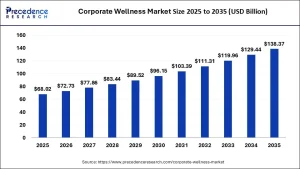
by The global corporate wellness market was valued at USD 68.02 billion in 2025 and is expected to experience steady growth over the coming years. The market is projected to increase from USD 72.73 billion in 2026 to nearly USD 138.37 billion by 2035, registering a CAGR of 7.36% during the forecast period from 2026 to 2035. This growth is driven by increasing employer focus on employee well-being, rising awareness of mental health, growing adoption of digital wellness solutions, and the need to improve workforce productivity while reducing healthcare costs.
What is Corporate Wellness?
Corporate wellness refers to employer-sponsored programs and initiatives designed to improve employees’ overall health and well-being. These programs often include:
- Health risk assessments
- Fitness and exercise programs
- Mental health support
- Stress management workshops
- Nutrition and weight management services
- Preventive health screenings
- Smoking cessation programs
- Virtual wellness platforms
The objective is not only to improve employee health but also to reduce absenteeism, increase engagement, and enhance workplace productivity.
Read Also: https://www.reportsgazette.com/liquid-crystal-polymer-market/
Corporate Wellness Market Key Highlights
- North America emerged as the leading regional market in 2025, accounting for over 40.28% of total revenue.
- The Asia Pacific market is expected to witness the fastest growth rate during the forecast period from 2026 to 2035.
- Among services, the health risk assessment segment dominated the market with a revenue share of 21.45% in 2025.
- Based on category, organizations and employers represented the largest segment, contributing 50.38% of the overall market revenue in 2025.
- By delivery model, onsite wellness programs maintained a strong market position, generating more than 60.50% of total revenue in 2025.
- Large-scale organizations led the market by end-use, capturing a significant revenue share of 63.90% in 2025.
Why Employee Health Matters More Than Ever
Employee health has become a critical priority for organizations worldwide. In today’s fast-paced work environment, employees face increasing levels of stress, burnout, sedentary lifestyles, and mental health challenges. These issues not only affect individual well-being but also have a direct impact on business performance.
Healthy employees are generally more productive, engaged, and motivated. They tend to have higher job satisfaction, lower absenteeism rates, and stronger workplace relationships. On the other hand, poor health can lead to decreased productivity, increased healthcare expenses, and higher employee turnover.
How Wellness Programs Improve Productivity
Employee productivity is one of the most important factors influencing business success, and wellness programs play a significant role in enhancing workplace performance. Healthy employees tend to have higher energy levels, improved concentration, and better problem-solving abilities, allowing them to complete tasks more efficiently.
Wellness initiatives such as fitness programs, stress management workshops, health screenings, and mental health support help employees maintain their physical and emotional well-being. As a result, workers are less likely to experience burnout, fatigue, and chronic health issues that can negatively impact job performance.
The Growing Demand for Healthy Work Environments
Today’s workforce is placing greater importance on health, wellness, and work-life balance than ever before. Employees increasingly seek workplaces that support their overall well-being rather than focusing solely on job performance.
A healthy work environment includes access to wellness resources, flexible work arrangements, mental health support, ergonomic workspaces, and programs that encourage healthy lifestyles. These initiatives help employees feel valued and supported, leading to higher job satisfaction and stronger employee retention.
Benefits of Investing in Employee Well-Being
Corporate wellness programs are no longer viewed as optional benefits; they are increasingly considered strategic investments. Organizations that invest in employee well-being often experience measurable business benefits that extend beyond workforce health.
One of the most significant advantages is improved productivity. Employees who are physically active and mentally healthy can focus better, manage workloads efficiently, and contribute more effectively to organizational goals. Wellness programs help reduce fatigue, stress, and workplace distractions, allowing employees to perform at their best.
Another important benefit is reduced healthcare costs. Preventive health initiatives such as health screenings, fitness programs, and nutrition counseling help identify potential health risks before they become serious medical conditions. This can lower healthcare claims and reduce long-term medical expenses for both employers and employees.
Key Trends Driving Market Growth
Several important trends are contributing to the rapid expansion of the corporate wellness market.
- Growing Focus on Mental Health: Mental health has become one of the most significant areas of investment in workplace wellness. Organizations are introducing employee assistance programs, counseling services, mindfulness training, and stress-management initiatives to address rising levels of anxiety and burnout.
- Rise of Hybrid and Remote Work: The shift toward hybrid and remote work has created new wellness challenges and opportunities. Companies are investing in virtual wellness programs, online fitness classes, and digital health platforms to support employees regardless of where they work.
- Increased Adoption of Preventive Healthcare: Preventive care is becoming a central component of corporate wellness strategies. Employers recognize that early detection and proactive health management can improve employee outcomes while reducing healthcare costs.
Technology is Changing Employee Wellness
Technology is transforming the way organizations design and deliver wellness programs. Digital tools have made wellness initiatives more accessible, personalized, and effective than ever before.
Wearable devices such as fitness trackers and smartwatches allow employees to monitor physical activity, heart rate, sleep patterns, and other health metrics in real time. These devices encourage healthier behaviors by providing instant feedback and helping users set achievable wellness goals.
Mobile wellness applications have also gained popularity. Employees can access fitness plans, guided meditation sessions, nutrition advice, and mental health resources directly from their smartphones. This convenience increases participation and helps employees maintain healthy habits regardless of their location.
Competitive Landscape
Several leading companies are actively shaping the corporate wellness market through innovative wellness solutions, digital health platforms, and employee engagement programs. Major market participants include:
- Wellness Corporate Solutions
- ComPsych
- Virgin Pulse
- EXOS
- Vitality Group
- Truworth Wellness
- Beacon Health Options
- Marino Wellness
- Wellsource Inc.
- Privia Health
- ADURO Inc.
Future Opportunities in Corporate Wellness
The future of corporate wellness presents significant opportunities as organizations continue to prioritize workforce health and productivity.
Artificial intelligence is expected to play a larger role in delivering personalized wellness experiences. AI-powered platforms will provide customized health recommendations, predictive health insights, and real-time wellness monitoring.
The integration of wearable technology will continue to expand, enabling organizations to track wellness outcomes more accurately and design targeted health interventions.
Get this report to explore global market size, share, CAGR, and trends, featuring detailed segmental analysis and an insightful competitive landscape overview: https://www.precedenceresearch.com/sample/1066
You can place an order or ask any questions. Please feel free to contact us at sales@precedenceresearch.com |+1 804 441 9344

