 by
by Introduction
The global pharmaceutical industry is undergoing a major transformation as healthcare systems worldwide seek ways to balance rising treatment costs with the growing demand for quality care. At the center of this transformation is the generic drugs market, a sector that has become essential for improving healthcare accessibility, reducing pharmaceutical expenditures, and ensuring the availability of life-saving medications.
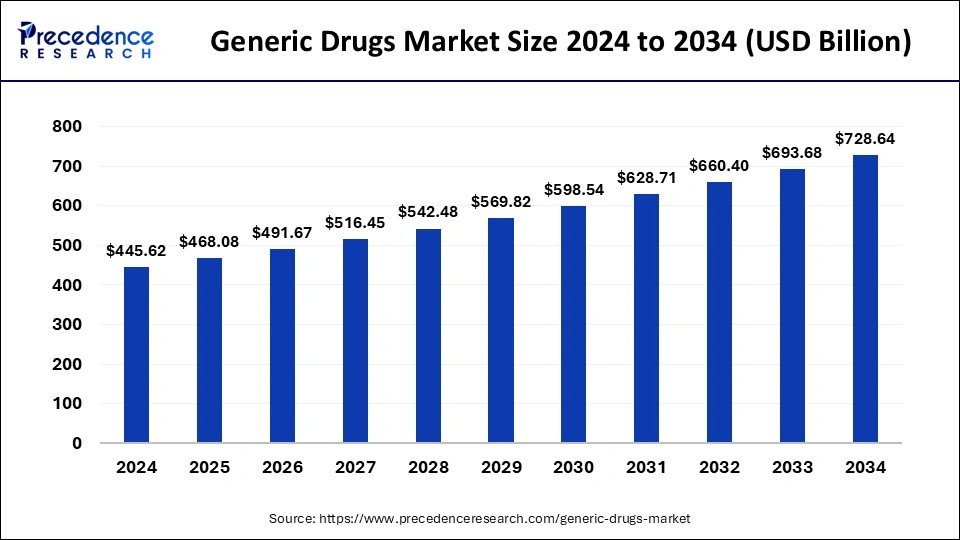
The global generic drugs market was valued at approximately USD 468.08 billion in 2025 and is projected to reach around USD 762.48 billion by 2035, expanding at a CAGR of 5% during the forecast period. The market’s growth is fueled by increasing chronic disease prevalence, patent expirations of branded drugs, rising healthcare expenditures, and growing acceptance of cost-effective treatment alternatives.
Understanding Generic Drugs
Generic drugs are pharmaceutical products designed to be therapeutically equivalent to branded medicines. They contain the same active ingredients, dosage strength, safety profile, route of administration, and intended use as the original branded product.
Once the patent protection of a branded drug expires, other manufacturers can develop and market generic versions. Because generic manufacturers do not bear the enormous costs associated with discovering and developing new drugs, they can offer medicines at significantly lower prices while maintaining the same therapeutic benefits.
Get Sample: https://www.precedenceresearch.com/sample/1205
Why the Generic Drugs Market Is Growing
Rising Healthcare Costs Worldwide
Healthcare costs continue to increase across both developed and developing nations. Expensive branded medicines often create financial challenges for patients and healthcare systems alike.
Generic drugs help address this challenge by offering lower-cost alternatives without compromising effectiveness. Governments and insurance providers increasingly promote generic substitution to reduce healthcare spending while maintaining quality patient care.
Increasing Burden of Chronic Diseases
The prevalence of chronic diseases such as diabetes, hypertension, cardiovascular disorders, respiratory illnesses, and cancer is rising globally. These conditions often require long-term treatment and continuous medication use.
Affordable generic medicines allow patients to adhere to treatment plans more consistently, improving health outcomes while reducing financial strain. The growing burden of chronic diseases remains one of the strongest drivers of market expansion.
Patent Expiration of Blockbuster Drugs
The pharmaceutical industry is entering a period characterized by significant patent expirations. As patents on high-revenue branded drugs expire, generic manufacturers gain opportunities to introduce lower-cost alternatives.
This ongoing “patent cliff” is creating substantial growth opportunities across multiple therapeutic areas, including oncology, cardiovascular care, diabetes management, and neurological disorders.
The Economic Value of Generic Medicines
Generic drugs provide benefits that extend far beyond individual patients. They generate substantial savings for healthcare systems by reducing prescription drug expenditures.
Lower medication costs allow governments and insurers to allocate healthcare budgets more efficiently while improving access to treatment for larger populations. This economic value has made generic medicines a key component of national healthcare strategies around the world.
In many countries, generic medicines account for the majority of prescriptions filled, demonstrating their importance in ensuring sustainable healthcare delivery.
Industry Evolution From Simple Generics to Advanced Therapies
The generic pharmaceutical industry has evolved significantly over the past two decades.
Historically, manufacturers focused on producing simple oral medications after patent expiration. Today, the market includes:
- Complex generics
- Injectable formulations
- Specialty pharmaceuticals
- Extended-release medications
- Biosimilars
- Drug-device combination products
This evolution has increased the scientific complexity of generic drug development while creating higher-value opportunities for manufacturers. Industry growth is increasingly being driven by innovation rather than solely by price competition.
The Rise of Biosimilars
One of the most important developments in the generic pharmaceutical industry is the growth of biosimilars.
Biologic therapies are among the most expensive medications available today. Biosimilars offer highly similar alternatives that can significantly reduce treatment costs for conditions such as cancer, autoimmune diseases, and inflammatory disorders.
As patents for biologic drugs continue to expire, biosimilars are expected to become one of the fastest-growing segments within the generic drugs market. Pharmaceutical companies are increasing investments in this area to capture emerging growth opportunities.
Digital Transformation in Generic Drug Distribution
Digital healthcare technologies are changing how patients access medicines.
Online pharmacies, telemedicine platforms, and digital prescription services are making generic medicines more accessible than ever before. Patients can compare prices, consult healthcare professionals remotely, and receive medications directly at home.
Digital distribution channels are particularly valuable in rural and underserved regions where traditional pharmacy access may be limited. As digital healthcare adoption accelerates, online pharmaceutical sales are expected to contribute significantly to market growth.
Regional Market Outlook
- North America: North America currently represents the largest share of the global generic drugs market, accounting for approximately 39% of total revenue. High healthcare spending, strong regulatory support, aging populations, and widespread generic adoption contribute to regional dominance.
- Asia Pacific: Asia Pacific is emerging as one of the fastest-growing markets. Countries such as India and China play critical roles in global generic drug manufacturing and exports. Expanding healthcare infrastructure, increasing healthcare awareness, and large patient populations continue to drive demand across the region.
- Europe: European healthcare systems actively promote generic medicines through reimbursement programs and cost-containment strategies. The region remains a major contributor to global market revenue.
- Latin America: Latin America, the Middle East, and Africa are witnessing growing adoption of generic medicines as governments seek affordable healthcare solutions and improve pharmaceutical access.
Key Challenges Facing the Industry
Despite its strong growth outlook, the generic drugs market faces several challenges.
- Intense Price Competition: As multiple manufacturers enter the market after patent expiration, prices often decline dramatically. While this benefits consumers, it can significantly reduce profitability for manufacturers. Industry discussions increasingly highlight the pressure created by aggressive pricing competition.
- Regulatory Complexity: Generic drug approval requires compliance with strict regulatory standards. Manufacturers must demonstrate bioequivalence, maintain quality standards, and satisfy evolving regulatory requirements across multiple regions.
- Supply Chain Risks: The pharmaceutical industry relies heavily on global supply chains for active pharmaceutical ingredients (APIs) and raw materials. Supply disruptions can impact production capacity and drug availability.
- Drug Shortages: Declining profit margins can cause manufacturers to exit certain product categories, increasing the risk of medicine shortages in critical therapeutic areas.
Competitive Landscape
The global generic drugs market is highly competitive, with companies focusing on product innovation, geographic expansion, acquisitions, and biosimilar development.
Leading participants include:
- Teva Pharmaceutical Industries
- Viatris
- Sun Pharmaceutical Industries
- Dr. Reddy’s Laboratories
- Cipla
- Lupin
- Aurobindo Pharma
- Sandoz
- Hikma Pharmaceuticals
- Fresenius Kabi
Many of these companies are shifting toward complex generics and biosimilars to improve profitability and reduce exposure to commodity pricing pressures.
Future Trends Shaping the Market
Several trends are expected to define the next decade of industry growth:
- Artificial Intelligence in Drug Development: AI-driven analytics are helping pharmaceutical companies improve manufacturing efficiency, optimize clinical studies, and accelerate product development.
- Growth of Complex Generics: igher-barrier products such as injectables, inhalers, and specialty formulations are expected to generate stronger growth than traditional oral generics.
- Sustainable Manufacturing: Environmental sustainability is becoming increasingly important in pharmaceutical production. Manufacturers are investing in energy-efficient facilities, waste reduction programs, and environmentally responsible supply chains.
- Expansion of Healthcare Coverage: Growing healthcare access in emerging economies will continue to increase demand for affordable medicines, creating long-term opportunities for generic manufacturers.
Conclusion
The generic drugs market has become one of the most important pillars of modern healthcare. By delivering safe, effective, and affordable alternatives to branded medicines, generic drugs improve treatment accessibility while helping healthcare systems manage rising costs.
Driven by chronic disease prevalence, patent expirations, biosimilar growth, digital healthcare adoption, and technological innovation, the industry is positioned for sustained expansion over the next decade. As the global healthcare landscape continues to evolve, generic medicines will remain essential in ensuring that quality healthcare reaches patients across every region of the world.
Check this Report too: Internet of Things
You can place an order or ask any questions, please feel free to contact us at sales@precedenceresearch.com |+1 804 441 8440

- Generic Drugs Market Size to Worth USD 762.48 Billion by 2035 - June 12, 2026
- Corporate Wellness Market Size to Worth USD 138.37 Billion by 2035v - June 12, 2026
