
 by
by The global observability tools and platforms market is experiencing substantial growth as enterprises increasingly modernize IT environments with cloud-native architectures, containerized applications, hybrid infrastructure, and distributed systems. Organizations worldwide are investing heavily in observability solutions to gain real-time visibility into increasingly complex digital ecosystems.
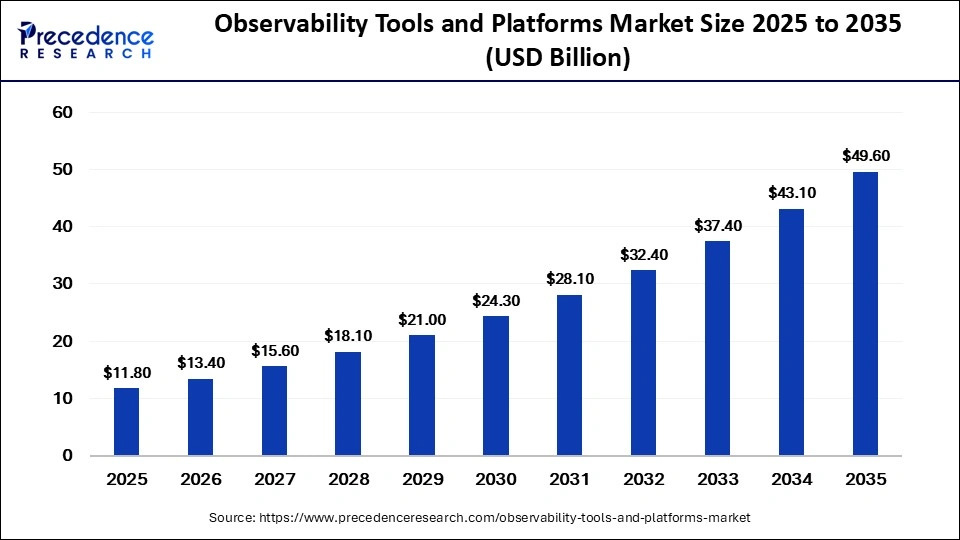
Modern observability platforms enable businesses to monitor, analyze, troubleshoot, and optimize IT systems through centralized visibility across applications, infrastructure, networks, databases, and user experiences. The growing need for operational resilience, faster incident response, and proactive performance optimization is significantly accelerating market adoption globally.
The rapid proliferation of Kubernetes environments, multi-cloud deployments, AI workloads, and edge computing infrastructure is making observability platforms mission-critical for enterprises seeking to maintain uptime, improve customer experiences, and reduce operational disruptions.
Read Also: Shipping Software Market
Quick Insights: What Is Driving the Observability Tools and Platforms Market?
North America currently dominates the observability tools and platforms market due to strong cloud adoption, advanced IT infrastructure, and the presence of major technology companies.
Asia Pacific is expected to witness the fastest growth because of expanding digital transformation initiatives and increasing enterprise cloud adoption.
Cloud-based observability platforms are becoming the preferred deployment model due to scalability, centralized monitoring, and real-time analytics capabilities.
Application performance monitoring (APM), distributed tracing, and log analytics are among the fastest-growing observability solution categories.
AI-driven observability and autonomous incident remediation are emerging as transformative trends reshaping enterprise IT operations.
Growing adoption of microservices and Kubernetes architectures is significantly increasing demand for end-to-end observability platforms.
Organizations increasingly prioritize observability platforms capable of integrating logs, metrics, traces, events, and security telemetry within unified dashboards.
What Are Observability Tools and Platforms?
Observability tools and platforms are software solutions designed to monitor, analyze, and troubleshoot the internal state of IT systems using telemetry data such as:
- Logs
- Metrics
- Traces
- Events
- Network telemetry
- Infrastructure signals
Unlike traditional monitoring systems, observability platforms provide deeper contextual intelligence and root-cause analysis capabilities across modern distributed environments.
These platforms help organizations:
- Detect anomalies
- Diagnose system failures
- Improve uptime
- Optimize application performance
- Reduce downtime
- Accelerate incident resolution
- Enhance user experiences
- Monitor cloud-native environments
Observability solutions are increasingly essential across:
- Cloud infrastructure
- Kubernetes clusters
- DevOps pipelines
- Hybrid environments
- AI workloads
- IoT ecosystems
- Financial systems
- Telecommunications networks
How Is Artificial Intelligence Transforming the Observability Tools and Platforms Market?
Artificial intelligence is fundamentally reshaping observability platforms by enabling intelligent automation, predictive analytics, and autonomous incident management.
AI-powered observability platforms can:
- Detect anomalies automatically
- Predict system failures
- Correlate events across environments
- Automate root-cause analysis
- Reduce alert fatigue
- Prioritize incidents
- Optimize resource allocation
- Trigger automated remediation workflows
Generative AI and machine learning models are increasingly integrated into observability platforms to help IT teams identify performance bottlenecks faster and reduce operational complexity.
AI-driven observability systems are also enabling:
- Intelligent log analysis
- Predictive infrastructure maintenance
- Automated troubleshooting
- Capacity forecasting
- Security anomaly detection
As enterprise IT environments continue growing more complex, AI-native observability is expected to become a foundational component of modern IT operations.
Why Is the Observability Tools and Platforms Market Growing Rapidly?
Expansion of Cloud-Native Infrastructure
Organizations are rapidly adopting:
- Multi-cloud architectures
- Kubernetes environments
- Containerized applications
- Serverless computing
- Edge infrastructure
This increasing complexity is driving demand for advanced observability solutions capable of providing centralized visibility across distributed systems.
Rising Demand for Real-Time Monitoring
Businesses increasingly require real-time monitoring and proactive performance management to maintain digital service reliability and customer satisfaction.
Growing Adoption of DevOps and Site Reliability Engineering (SRE)
DevOps and SRE teams increasingly rely on observability platforms for:
- Continuous monitoring
- Incident response
- Performance optimization
- Release validation
- Infrastructure automation
Increasing Downtime Costs
Organizations are investing in observability tools to minimize:
- Service outages
- Revenue losses
- Customer dissatisfaction
- Operational disruptions
Rising Complexity of AI Workloads
The rapid expansion of AI and generative AI infrastructure is increasing demand for observability solutions capable of monitoring GPU utilization, model performance, and distributed AI pipelines.
Why Is Kubernetes Observability Becoming a Major Industry Focus?
Kubernetes has become a foundational technology for modern cloud-native infrastructure, but managing Kubernetes environments creates significant operational complexity.
Observability platforms designed for Kubernetes environments help organizations:
- Monitor cluster health
- Analyze container performance
- Track distributed workloads
- Detect anomalies
- Optimize resource utilization
- Improve deployment reliability
The rapid expansion of containerized applications and microservices is making Kubernetes observability one of the fastest-growing segments in the market.
Organizations increasingly seek unified observability platforms capable of correlating:
- Logs
- Metrics
- Traces
- Infrastructure telemetry
- Security data
across highly dynamic cloud-native environments.
Could Autonomous Observability Become the Future of IT Operations?
The observability market is rapidly evolving toward autonomous operations powered by AI-driven automation.
Autonomous observability systems can:
- Detect incidents automatically
- Correlate telemetry data
- Identify root causes
- Trigger remediation workflows
- Optimize system performance without human intervention
These capabilities are increasingly reducing operational burdens on IT teams while improving infrastructure resilience and uptime.
Industry experts increasingly believe autonomous observability will become central to:
- Self-healing systems
- Autonomous cloud operations
- AI-driven infrastructure management
- Predictive incident prevention
over the next decade.
What Challenges Are Restricting Market Growth?
High Data Volumes and Storage Costs
Observability platforms generate enormous volumes of telemetry data, increasing storage and infrastructure expenses.
Integration Complexity
Enterprises often struggle integrating observability tools across:
- Legacy systems
- Multi-cloud environments
- Hybrid infrastructure
- Third-party platforms
Shortage of Skilled Professionals
Many organizations face difficulties hiring professionals with expertise in:
- Cloud observability
- Kubernetes monitoring
- Distributed tracing
- AI-driven operations
Alert Fatigue
Excessive monitoring alerts continue creating operational challenges for IT teams, increasing demand for AI-based event correlation systems.
Security and Compliance Concerns
Observability platforms increasingly handle sensitive infrastructure and operational data, creating cybersecurity and compliance challenges.
Segment Analysis: Which Segments Are Driving Revenue Growth?
Cloud-Based Observability Platforms Lead Adoption
Cloud-native observability platforms dominate the market because they offer:
- Centralized monitoring
- Scalability
- Faster deployment
- Real-time analytics
- Lower infrastructure costs
Application Performance Monitoring (APM) Witnesses Strong Demand
APM solutions continue seeing strong adoption because organizations increasingly prioritize digital user experiences and application reliability.
Distributed Tracing Emerges Rapidly
Microservices and Kubernetes architectures are increasing demand for distributed tracing technologies capable of monitoring transactions across highly distributed environments.
AI Observability Gains Momentum
Organizations increasingly seek observability platforms capable of monitoring:
- AI models
- GPU clusters
- Generative AI applications
- AI inference workloads
Regional Analysis: Which Regions Are Leading the Market?
Why Does North America Dominate the Observability Tools and Platforms Market?
North America remains the leading regional market due to:
- Advanced cloud infrastructure
- Strong enterprise technology spending
- Early adoption of AI-driven IT operations
- Large concentration of hyperscale cloud providers
- Mature DevOps ecosystems
The United States continues driving innovation through aggressive investments in AI observability, cloud-native operations, and enterprise automation platforms.
Why Is Asia Pacific Emerging as the Fastest-Growing Region?
Asia Pacific is experiencing rapid growth because of:
- Expanding enterprise cloud adoption
- Rising digital transformation initiatives
- Growth of SaaS ecosystems
- Increasing AI infrastructure investments
- Expanding telecommunications infrastructure
Countries such as India, China, Singapore, and Japan are increasingly investing in cloud-native monitoring and observability solutions.
Europe Maintains Strong Market Position
Europe continues witnessing strong adoption due to:
- Expansion of digital services
- Increasing cybersecurity regulations
- Growing cloud-native infrastructure deployments
- Rising enterprise automation initiatives
Financial services, telecommunications, and manufacturing sectors remain major adopters across the region.
Competitive Landscape: Which Companies Are Leading the Market?
The observability tools and platforms market is highly competitive, with major technology providers, cloud companies, and AI-driven observability startups aggressively investing in intelligent monitoring innovation.
Major Companies Operating in the Market
- Datadog
- Dynatrace
- Splunk
- New Relic
- Grafana Labs
- Elastic
- Cisco AppDynamics
- IBM
- Microsoft
- SolarWinds
- Honeycomb
- LogicMonitor
- Sumo Logic
- Broadcom
- AWS
These companies are focusing heavily on:
- AI-driven observability
- Unified telemetry platforms
- Kubernetes monitoring
- Autonomous remediation
- Cloud-native monitoring
- Security observability
- Generative AI integrations
Strategic acquisitions and AI platform integration continue reshaping market competition.
Case Study: AI-Driven Observability Improves Incident Resolution
A global financial services organization implemented an AI-powered observability platform integrated with:
- Distributed tracing
- Infrastructure monitoring
- Predictive analytics
- Automated incident remediation
The deployment enabled the company to:
- Reduce incident response times
- Improve system uptime
- Minimize operational disruptions
- Lower alert fatigue
- Accelerate root-cause analysis
- Improve customer experiences
The organization also achieved improved infrastructure scalability and operational efficiency through AI-driven monitoring automation.
Conclusion: AI, Cloud-Native Infrastructure, and Autonomous Monitoring Are Reshaping the Observability Market
The observability tools and platforms market is entering a significant growth phase driven by cloud modernization, distributed computing, AI workloads, and rising demand for operational resilience.
Future market growth will increasingly focus on:
- AI-driven observability
- Autonomous remediation
- Kubernetes monitoring
- Unified telemetry platforms
- Real-time analytics
- Predictive infrastructure management
- AI workload visibility
- Self-healing systems
As enterprise infrastructure becomes increasingly complex and digitally interconnected, observability platforms will remain essential for enabling resilient, intelligent, and scalable IT operations globally.
Get a Sample Copy: https://www.precedenceresearch.com/sample/8395
For inquiries regarding discounts, bulk purchases, or customization requests, please contact us at sales@precedenceresearch.com

- Hexanal Market Size to Reach USD 412.98 Billion by 2035 - June 26, 2026
- Cubeb Oil Market Size to Reach USD 122.93 Billion by 2035 - June 26, 2026
- U.S. Battery Logistics Market Size to Reach USD 11.43 Billion by 2035 - June 25, 2026
